Eight apps.
One holds the whole arc; seven each take a single cycle, or a single job, and finish it. Below is what each one is for. The drawing beside each is the shape of the thing that app computes — the real figure, drawn from the same numbers the app will read. None of them is a screenshot, because none of them has shipped: we would rather show you the quantity than a mock-up of a screen that does not exist yet.
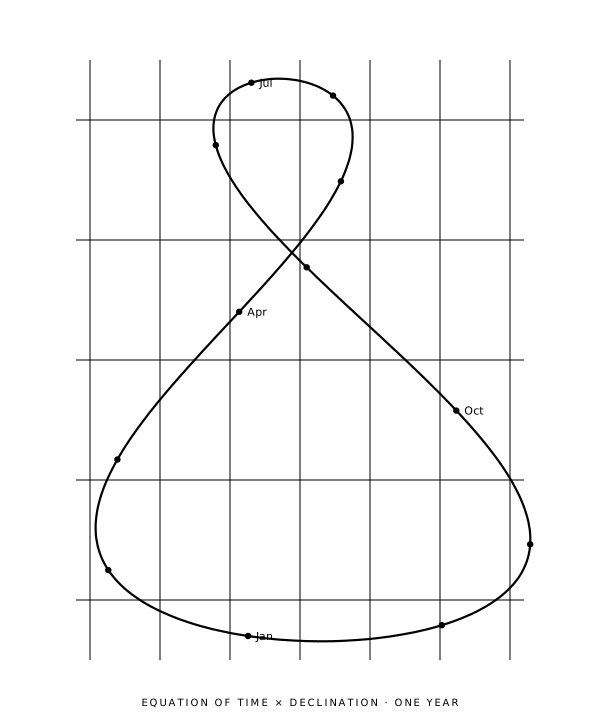
Cycles Arc
The whole sky, followed day after day.
Open it and it tells you what is above you now: the moon and its phase, the sun’s times for your exact spot, which planets are up and whether they are worth going outside for, and what the almanac says is coming. It keeps going day after day rather than answering one question and stopping — the month ahead, the next eclipse, the next full moon, the next meteor peak. Alarms for any of those are part of the app and not a separate purchase. It computes on the device, so it works with no signal.
Forthcoming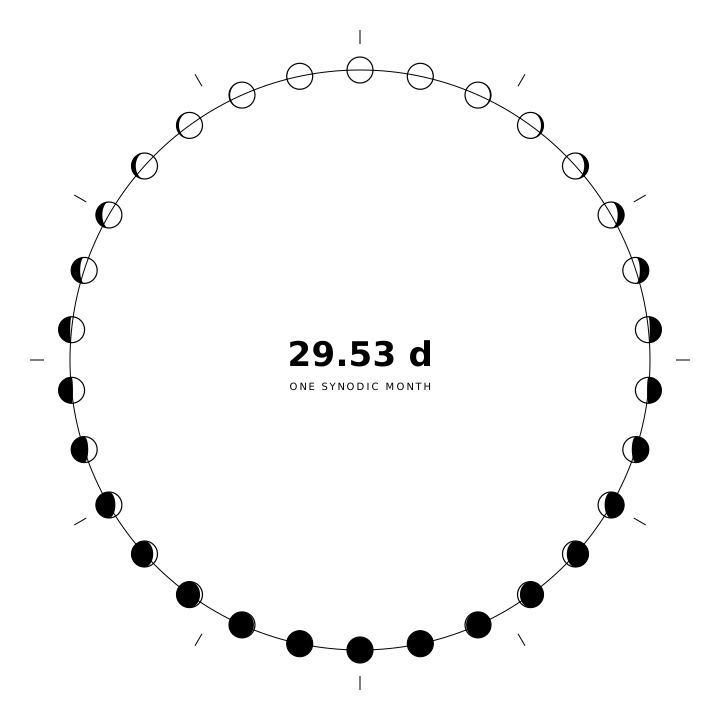
Moon
The moon tonight, and every night of the year.
Phase, illumination to the tenth of a percent, rise and set for where you are standing, and the moon drawn as it actually looks tonight — at its true libration, so the face you see on screen is the face in the sky, not a stock photograph of a different night. Then the year around it: every eclipse, which full moons are closest and farthest, and the whole ring of phases.
Forthcoming
Wake
An alarm clock that runs on the sky, not on a number.
You do not set it for 6:40. You set it for sunrise, or forty minutes before sunrise, or first light, or moonrise, or the start of golden hour, or the moment a full moon clears the horizon — and it fires at that real instant, recalculated for wherever you woke up and whatever the date is. Travel, and it moves with you. The times are corrected for the height of your ground and the horizon it makes, so it is not the generic sunrise for your city.
Forthcoming
Light
Describe the light you want; find out when it next happens here.
The photographer’s and film-maker’s planner, worked backwards. Instead of asking when golden hour is today, you say what you are after — low sun down that street, a full moon rising behind that ridge, the milky way over that headland — and it tells you the next dates and times it is actually available from where you plan to stand, with the sun and moon bearings you need to line the shot up.
Forthcoming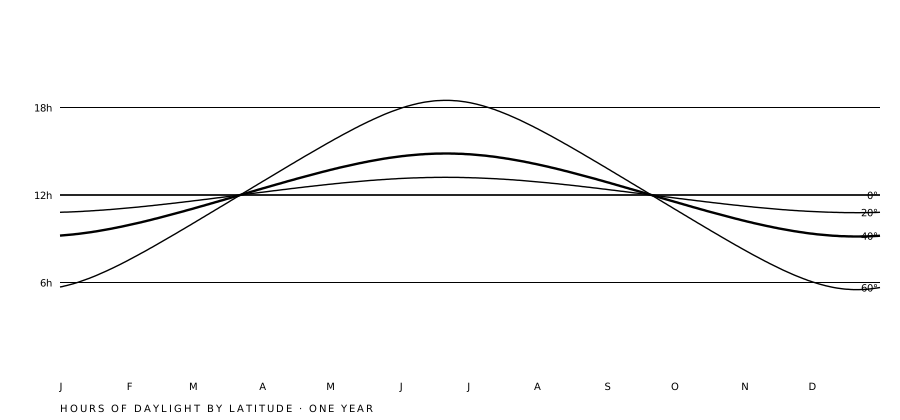
Time Machine
Any date in thirty thousand years, computed the same way as tonight.
Name a place and a date — the night you were born, the eclipse your grandmother described, a battle, a founding, a date four thousand years from now — and it draws that sky. It is not a re-skin of tonight or an artist’s impression: it runs the same ephemeris over the range it is good for, so a solstice in 9000 BCE is worked out to the same standard as this evening’s sunset.
Forthcoming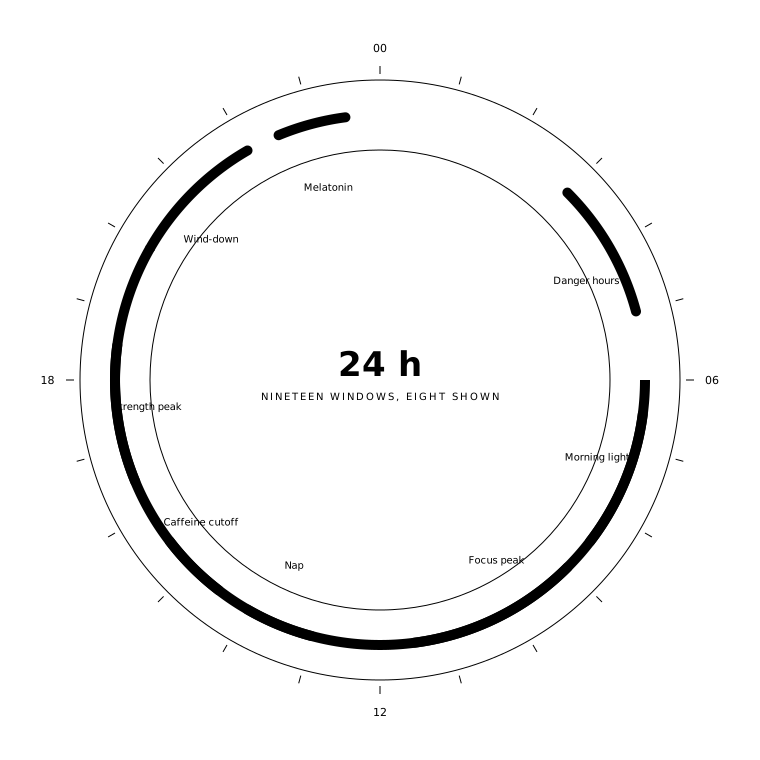
Body
Your body clock, set by the light your place really gets.
Nineteen windows through the day, timed to your circadian phase rather than to the hour on the wall: the last coffee that still clears before you want to sleep, when to get light and when to avoid it, when melatonin would help and when it would hurt, the hours your body is sharpest, and how many days a flight will actually cost you. Fly somewhere else and every window moves, because the light there is different.
Forthcoming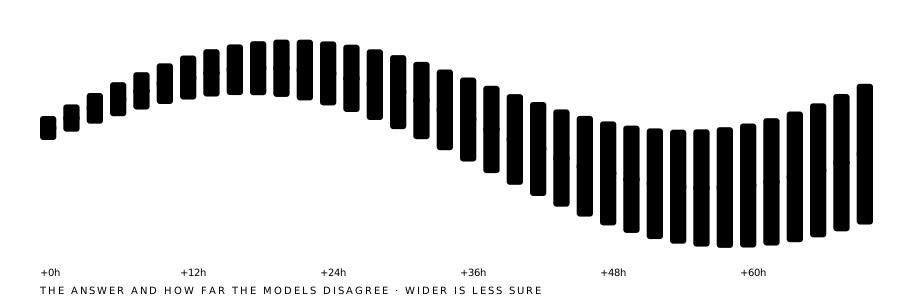
Flow
A cycle tracker that tells you how sure it is.
Most trackers print a single confident date because a date looks tidy. Yours is not a tidy number, and pretending otherwise is how they get it wrong without ever admitting it. Flow gives the window and the confidence in it, and the window narrows as it learns you. When it does not know, it says so rather than inventing a day.
Forthcoming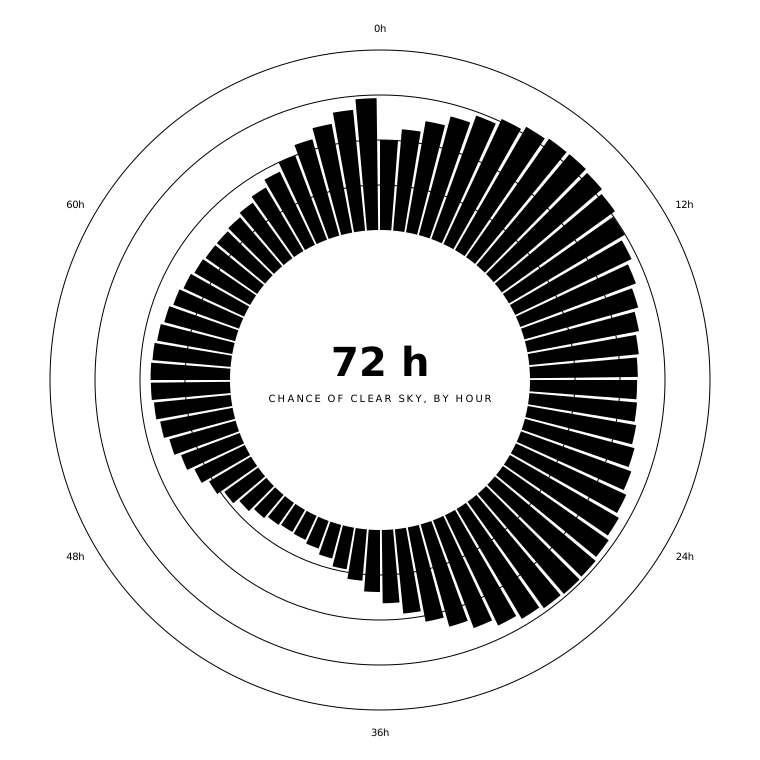
Chores
The forecast rewritten as “do it now”.
You do not want the pressure in hectopascals; you want to know whether to put the washing out. Name the job — hang the washing, mow, paint the fence, wash the car, take the telescope out — and it reads the next three days for the conditions that job actually needs and hands back the windows, worst first. Each window carries a confidence taken from how much the national models disagree with one another, so a shaky forecast looks shaky instead of looking certain.
Forthcoming